In my profession, looking sharp is an absolute essential. While there are varieties of dress codes across varying financial industries, financial institutions, and even within a specific company, the bottom line is a need to look professional. In my case, the institution I work for has a two season dress code. In spring/summer/early fall, we wear polos and khakis. In late fall/winter, we wear dress shirts and ties. While I love the comfort of a polo, I secretly love how I look in a shirt and tie. My style is solids/solids, and I have some dang good combinations. Here is my current favorite: (needs to be ironed/washed)

Now, as we are supposed to choose something we wear or eat, and as this would be difficult on my digestive system, I think it is fairly obvious what route I am taking.
Now the composition of this shirt/tie combo is:
Tie: 100% Polyester
Shirt: 45% Polyester, 55% Cotton
Cotton is a widely used material, it has been in use for hundreds, if not thousands, of years, and I think everyone has a basic idea of where it comes from. Polyester however, while just as widely known and used, has a more cloudy trail to it's origins. Cotton is grown, sown, separated, washed, mixed, cleaned, combed, carded, twisted, and spun. It is then woven into a fabric.
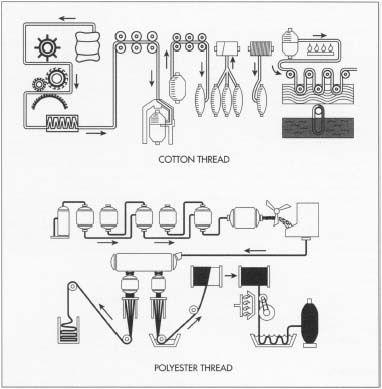
Polyester, on the other hand, came about in a laboratory within the last century. It is a silk-like material made of synthetic plastics. The name itself, while widely used, is simply a chemical composition. "Poly" means many. "Ester" is a basic organic (containing carbon, hydrogen, and oxygen) compound. Below is the structural formula for an ester. To translate for those not versed in organic chemistry (as the general populace is not), "O" is an oxygen molecule. "C" is a carbon molecule. The double lines between the "C" and the "O" are referring to a double bond, a type of chemical bond where two electrons are being shared. The single lines refer to the sharing of a single electron. The R refers to another ester in the chain, or another chemical that is bonded to the ester. The actual formula for the material we generally refer to as "polyester" is thus:
(C6H4)(CO2CH3)2 + 2 C2H4(OH)2 → 1/n {(C6H4)(CO2)2(C2H4)}n + 2 CH3OH

What all that means in English is that there are chains of the above chemical compound that link to each other, forming threads through a chemical process involving heating, cooling, stretching, and extruding. Those threads are then spun into spools, which can be used very much like cotton strands. The type of chemical bond between the elements indicates a resistance to degradation, making polyester a ideal material for durability, sun resistance, and ultimately, comfort.
Now, once you have these threads, you can weave them together to form a fabric. In this case, "Oxford", the style of my shirt, is actually a fabric style, referring to how the fibers were woven together, shown below:

photo credit: http://www.teonline.com/articles/oxford-weave.jpg
This specific weave makes the shirt strong, lightweight, and soft. Now, I could then go on to the vicissitudes of who actually makes the shirt, their working conditions, etc, but for my purposes, I was more interested in the materials themselves. Where this relates to farming is thus: Cotton obviously comes from a farm. Both the esters and the alcohol for polyester, however, are derived from petroleum oil. The dyes to color the clothes were once derived from substances grown on farms, but are generally chemically produced at this point. However, the idea to use polyester as a material for clothing production was derived from the ages old tradition of weaving silk into clothing, so the ideas of using synthetic fiber to form clothes, and the processes of how it is woven after it is produced link back to silk, wool, and cotton farmers.

No comments:
Post a Comment